
Why Izakaya Bars Are Perfect for Groups, Dates, and After-Work Hangouts
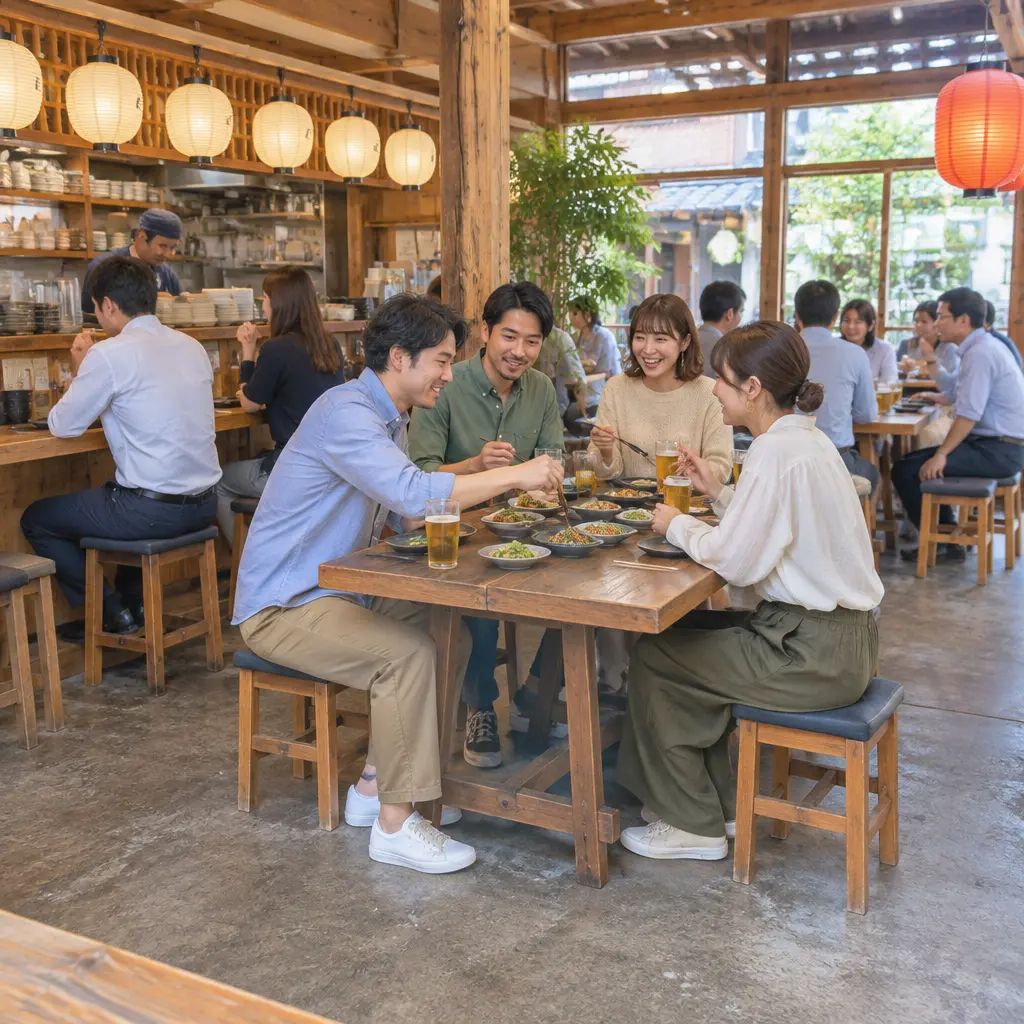
An izakaya is a Japanese-style pub where people gather over drinks and a variety of small, shareable dishes. That format makes izakaya bars especially well suited to groups, dates, and after-work meetups: guests can order at different paces, sample several flavors, and keep the atmosphere sociable without committing to a formal, fixed-course dinner. Japan’s National Tax Agency describes izakaya among the country’s drinking establishments, while Japan National Tourism Organization materials commonly present them as places to enjoy food and drinks in a casual setting. The same features that make izakaya dining flexible—shared plates, varied menus, and a relaxed pace—help explain its appeal across occasions.
Izakaya dining supports flexible, social meals
“Izakaya” is formed from the Japanese words i (to stay) and sakaya (sake shop), a history that points to the category’s evolution from places where customers could drink on the premises. The Japan National Tourism Organization describes izakaya as casual restaurants serving alcoholic beverages alongside food. In practice, the label covers many establishments, from neighborhood pubs to polished restaurants, so the experience varies by region and venue.
The defining attribute is not a single dish or décor style but a meal built around ordering and sharing. A table might combine grilled skewers, sashimi, fried chicken, tofu, pickles, rice, and drinks. Because diners can add items over time, the format suits different appetites and lets conversation remain central. This distinguishes an izakaya from a restaurant organized mainly around individual entrées or a tightly sequenced tasting menu.
Small plates create variety without requiring one fixed meal
Izakaya menus typically include appetizers and small dishes, often called otsumami, as well as more substantial options. The category is broad: yakitori means grilled chicken skewers; karaage is Japanese-style fried chicken; and edamame is young soybeans, commonly served as a snack. These are examples rather than requirements—menus differ widely, and some venues specialize in seafood, regional cooking, or a particular style of grilling.
That range makes ordering adaptable. A table can begin with a few snacks, add hot dishes as they arrive, and finish with rice or noodles if diners want a fuller meal. Shared portions also invite comparison and conversation, while individual ordering makes it possible to accommodate different preferences. Guests should still ask about ingredients and dietary needs, since sauces, broths, and cooking methods can vary.
A casual pace encourages conversation
Unlike a formal multi-course dinner, many izakaya meals unfold through repeated rounds of ordering. This can make the outing feel less scripted: guests have time to talk, decide what to try next, and linger over a drink. The restaurant’s layout and sound level matter, however. A lively counter-oriented pub may be energetic but noisy, while a quieter dining-focused venue may be better for a long conversation.
The format’s flexibility leads naturally to its appeal for different kinds of gatherings. Groups benefit from variety and shared ordering, dates can use the meal as an easy conversation prompt, and coworkers can transition from the working day to a relaxed social setting.
Izakaya bars make group dining easier to coordinate
For groups, an izakaya is useful because it replaces the challenge of choosing one dish for everyone with a menu of options for the table. Diners can share familiar favorites while trying something new, and ordering in rounds helps a group adjust the meal to its appetite and schedule. The benefit is practical as well as social: a mixed menu can serve people who want a light snack, a full dinner, or something in between.
Shared ordering accommodates different tastes
A table can choose a combination of vegetables, seafood, meat, and starches rather than asking every guest to settle on the same style of entrée. For example, edamame and pickles can start the meal, followed by yakitori, grilled fish, and a rice dish. Sharing makes the meal participatory, but it is sensible to check portion sizes and dietary restrictions before ordering; small plates are not always equally sized, and some dishes may contain common allergens such as soy, wheat, shellfish, or sesame.
The format works for casual celebrations and reunions
Birthdays, reunions, and informal celebrations often benefit from an environment where people can arrive, order, and socialize without a formal program. Izakaya menus support that ease, particularly when a venue offers larger tables or group reservations. For busy evenings, booking ahead and asking about minimum spends, set menus, or time limits can prevent surprises. These details vary by restaurant rather than being universal features of izakaya dining.
Group-friendly does not mean every venue fits every group
Some izakaya are compact, smoky, or designed around counter seating; others are spacious and suited to larger parties. A group should consider noise, seating, accessibility, and whether the venue can accommodate children or non-drinkers. Japan’s National Tax Agency reports that alcohol consumption in Japan has declined over the long term, a reminder that izakaya culture is not exclusively about drinking. Food-focused visits and non-alcoholic choices can also be part of the experience, depending on the restaurant’s menu.
Izakaya bars give dates a relaxed setting
For a date, an izakaya offers an informal alternative to a highly structured dinner. The shared menu provides natural conversation starters—what to order, which dish is a favorite, or whether to try something unfamiliar—while the option to order gradually gives the evening room to develop. A venue’s atmosphere is important: a lively neighborhood pub may feel fun and spontaneous, while a quieter, more polished izakaya may be better for getting to know someone.
Small dishes make it easy to keep the evening flexible
A couple can begin with a drink and a few plates, then decide whether to extend the meal. This avoids the pressure of ordering a large entrée immediately and makes it easier to accommodate different appetites. It can also help first-time visitors explore Japanese dishes in manageable portions. If the restaurant is busy or uses timed seating, though, the flexible pace may be limited; checking the booking conditions is worthwhile.
Atmosphere shapes the date experience
Izakaya settings range from intimate and subdued to animated and crowded. Before choosing, consider whether the priority is a quiet conversation, a lively first meeting, or a more elaborate food experience. Seating at a counter can create a close, informal atmosphere, whereas a private or semi-private room can offer more privacy. These are venue-specific options, not guaranteed characteristics of every izakaya.
Izakaya bars suit after-work hangouts
The traditional izakaya has a strong association with post-work socializing in Japan, often described through the practice of meeting colleagues for drinks and food. The modern appeal is broader: coworkers, friends, and travelers can use the same casual setting to unwind without planning a formal event. Small plates and drinks are well suited to a short stop, while a longer visit can develop into dinner.
Food and drinks can match different schedules
After-work plans are rarely identical for everyone. Some guests may want a quick drink, while others need a meal. Because many izakaya offer snacks alongside filling dishes, people can join for different lengths of time and choose accordingly. Non-alcoholic drinks may be available, but selection varies; checking the menu in advance helps make the venue welcoming to everyone.
A shared meal can support workplace connection
Eating together creates an informal setting for conversation beyond work tasks. The small-plate format can encourage participation, as colleagues recommend dishes and share discoveries. Still, workplace gatherings should remain considerate: make alcohol optional, account for dietary requirements, and choose a location that is accessible and comfortable for the whole team. A relaxed setting is most effective when no one feels pressured to drink or stay longer than they wish.
Choosing an izakaya for the occasion
The best venue depends on the group’s size, budget, appetite, and preferred atmosphere. Menus, prices, seating policies, and service styles differ, so a little preparation can make the experience smoother.
- For a large group, confirm reservation options, table size, and whether the restaurant offers shared or set menus.
- For a date or conversation-focused visit, check noise levels and look for a quieter seating area.
- For dietary needs, ask about ingredients, cross-contact, and suitable alternatives before ordering.
- For an after-work gathering, check opening hours, peak times, and whether non-alcoholic drinks are available.
- For first-time visitors, choose a few familiar dishes and add one or two unfamiliar options to share.
A simple example is a mixed group ordering edamame and pickles first, then adding skewers, a vegetable dish, and a rice or noodle option. The table can stop there or order more, depending on appetite. This illustrates why the format works across occasions: the meal can grow or remain modest without changing the social character of the outing.
Conclusion: Izakaya dining makes social meals adaptable
Izakaya bars are well suited to groups, dates, and after-work hangouts because they combine shareable dishes, varied menus, and a flexible, sociable pace. Groups can accommodate different tastes, dates can keep a meal informal and conversational, and coworkers can gather without requiring everyone to follow the same schedule or drink alcohol. The experience depends on the individual venue, so seating, noise, menu details, and reservation policies matter. To make the most of an izakaya visit, explore the menu, order at a comfortable pace, and choose a restaurant that fits the occasion and the people attending.
Sources: Japan National Tourism Organization, “Izakaya,” https://www.japan.travel/en/guide/izakaya/; National Tax Agency of Japan, “Overview of Liquor Tax and the Liquor Administration in Japan,” https://www.nta.go.jp/english/taxes/liquor_administration/; National Tax Agency of Japan, “The 2023 Liquor Industry in Japan,” https://www.nta.go.jp/english/taxes/liquor_administration/
Related Post
How an Izakaya Inspired Bar Differs from a Traditional Izakaya
An izakaya-inspired bar borrows the convivial spirit of Japan’s neighborhood drinking spots but adapts it [...]

The Growing Appeal Of Izakaya Style Bars In Western Cities
Izakaya style bars are informal Japanese dining venues that combine drinks, small plates, counter seating, [...]
Miso Ramen Isn’t One Thing—Here’s the Full Regional Breakdown
Miso ramen is a family of Japanese noodle soups seasoned with miso—not a single standardized [...]