
What Is an Izakaya-Inspired Bar? The Modern Take on Japan’s Beloved Pub Culture
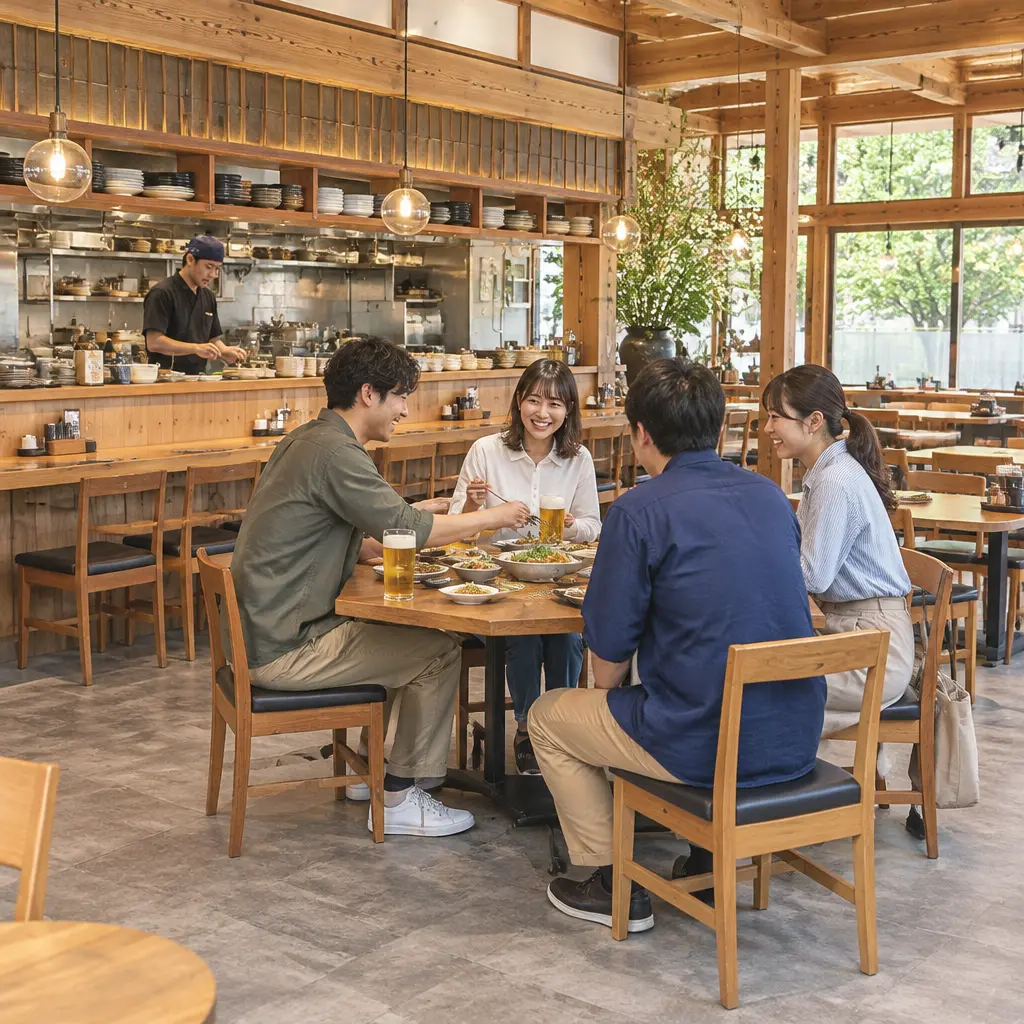
An izakaya-inspired bar is a contemporary drinking and dining venue that borrows the convivial spirit of Japan’s izakaya pubs: guests gather over drinks, order shareable dishes, and settle in for an informal evening rather than a formal, course-by-course meal. The modern version may adapt Japanese flavors and customs to local ingredients, menus, and drinking habits, so it is best understood as an inspiration rather than a promise of strict historical authenticity. Its appeal reflects a wider interest in eating out: the Japan Foodservice Association reported that Japan’s restaurant-industry sales in 2023 reached 112.3% of the previous year’s level, while izakaya sales recovered to 108.8% of 2019 sales. Those figures describe Japan’s industry, not every international bar, but they help explain why the format continues to attract attention.
Izakaya-inspired bars combine informal hospitality, drinks, and small plates
An izakaya is commonly described in English as a Japanese drinking establishment serving food—often compared loosely with a pub or tavern. The Japan National Tourism Organization presents izakaya as casual places to enjoy drinks and a range of dishes, typically ordered for the table. “Izakaya-inspired bar” is not a regulated category with one official definition; it describes a venue that uses this social, food-and-drink model as a design and service reference.
The key distinction is the combination. A bar may serve Japanese spirits without being izakaya-inspired, and a Japanese restaurant may offer small plates without emphasizing the relaxed, drink-led pub experience. The concept usually brings together a welcoming atmosphere, drinks with food, flexible ordering, and a menu suited to sharing. That combination also allows venues to vary considerably: one may resemble a neighborhood pub, while another may feel like a contemporary cocktail bar.
Casual, social dining defines the format
Izakaya dining is generally conversational and informal. Rather than following a fixed tasting sequence, a group can order several dishes over time, adding food as the evening develops. This makes the meal adaptable to different appetites and group sizes. The approach is related to, but not identical with, tapas-style dining: both may involve sharing, yet an izakaya-inspired venue typically draws more directly on Japanese pub culture, ingredients, dishes, and drinks.
In Japan, izakaya can range from independent local establishments to national chains. The Japan Foodservice Association’s monthly industry statistics track izakaya and other foodservice categories separately, illustrating that izakaya is a recognizable part of the country’s restaurant market. The figures measure business performance, however, not how faithfully any individual establishment represents the tradition.
Drinks and food are designed to work together
A typical menu might pair beer, sake, shochu, or Japanese-style cocktails with grilled skewers, fried chicken, tofu, pickles, noodles, or other small dishes. These examples are common possibilities, not a required checklist. A modern bar may also include regional produce, vegetarian options, nonalcoholic drinks, or dishes influenced by its local community.
The format encourages guests to choose a drink and then build a meal around it—or to order food first and explore drinks alongside it. That flexibility is one reason the concept can work for after-work gatherings, casual dates, and group dinners. It also means a well-planned menu should offer enough variety for guests who do not drink alcohol.
Izakaya-inspired menus translate Japanese pub dishes for today
The food in an izakaya-inspired bar is usually made up of approachable, individually ordered dishes rather than a single large entrée for each guest. The Japan National Tourism Organization’s descriptions of izakaya dining emphasize the range of dishes available alongside drinks. In practice, modern venues adapt that pattern: some lean on familiar Japanese comfort food, while others use the format to present seasonal or locally sourced cooking.
Small plates make ordering flexible
Small plates are portions intended to be ordered in multiples, shared, or combined into a larger meal. Examples may include edamame, sashimi, agedashi tofu, grilled vegetables, karaage, and yakitori. A thoughtful menu balances textures and flavors—such as crisp and tender, rich and refreshing—so guests can keep ordering without every dish feeling alike.
“Small plate” does not necessarily mean that every dish is tiny or meant to be shared. Portions vary by restaurant, and diners should check the menu or ask staff when planning a meal. Clear descriptions of serving size, allergens, and dietary ingredients help make the format accessible to more guests.
Regional and contemporary variations broaden the idea
Japanese food is not one uniform cuisine, and izakaya menus reflect that diversity. A venue might emphasize grilled dishes, seafood, fried snacks, regional specialties, or a chef’s seasonal interpretation. Outside Japan, “inspired” often signals that the kitchen is adapting the format rather than reproducing a particular regional tradition exactly.
This distinction matters for both diners and operators. A menu can draw on Japanese techniques while using local fish or produce, but it should describe dishes accurately and avoid presenting a broad, hybrid menu as a definitive account of Japanese food. Seasonal menus and well-informed staff can give guests useful context without turning a casual meal into a lecture.
Izakaya-inspired drinks and hospitality shape the experience
An izakaya-inspired bar is more than a list of Japanese drinks. Its service style, pacing, room design, and approach to sharing all contribute to the experience. The aim is typically to make it easy for guests to linger, order another dish, and enjoy conversation without the formality of fine dining.
A varied drinks list supports different preferences
Depending on the venue, the drinks list may include Japanese beer, sake, shochu, whisky, highballs, cocktails, and nonalcoholic options. Sake is brewed from rice, while shochu is a distilled spirit that can be made from ingredients such as barley, sweet potato, or rice. A highball commonly combines whisky and carbonated water, though recipes and house variations differ.
These categories offer different ways to pair drinks with food, but no single beverage defines the concept. A strong program explains unfamiliar terms, offers options by flavor or style, and provides nonalcoholic choices with comparable care. This is especially important in a group setting, where guests may have different preferences or choose not to drink.
Atmosphere and pacing encourage guests to stay
Warm lighting, counter seating, communal tables, and visible cooking areas are common design choices, but none is essential. What matters more is an environment that feels lively and welcoming, with service that supports gradual ordering. A useful sign of the format is whether guests can comfortably share several dishes and drinks over time, rather than being rushed through a fixed dinner sequence.
The Japan Tourism Agency’s guidance for visitors to Japan treats dining customs as part of the travel experience, while the Japan National Tourism Organization highlights izakaya as a way to encounter casual food-and-drink culture. For international venues, good hospitality also means explaining unfamiliar customs without assuming every guest knows how to order or share.
Izakaya-inspired bars differ from restaurants and cocktail bars
The concept sits between several familiar venue types. Like a pub, it often centers on drinks and a relaxed social setting; like a restaurant, it offers a meaningful food menu; and like a cocktail bar, it may place care into its beverage program. Its defining feature is the way those elements are combined with Japanese izakaya references and an informal, shareable style of dining.
An izakaya-inspired bar is not automatically an authentic izakaya
“Izakaya-inspired” signals influence, not certification. The term does not establish that a venue is Japanese-owned, uses traditional recipes, or represents a specific region. An establishment can offer a thoughtful interpretation while adapting ingredients and service to its location; transparent language helps guests understand what they are being offered.
For diners seeking a more traditional experience, useful clues include a menu with Japanese-language dish names explained clearly, a broad selection of food meant to accompany drinks, and staff who can discuss ingredients and preparation. These are indicators, not a formal authenticity test. Japanese dining itself is varied, and no checklist can capture every neighborhood or regional style.
The modern version responds to local dining habits
Modern venues may adjust portion sizes, spice levels, menus, opening hours, and beverage choices to suit local expectations. They may also make room for vegetarian and vegan cooking, allergy-aware preparation, or alcohol-free pairings. The result can preserve the central idea—casual social dining with drinks and a variety of dishes—without copying every detail of a Japanese establishment.
This flexibility is commercially relevant, but it should be balanced with cultural care. Naming dishes accurately, crediting culinary influences, and training staff to explain ingredients help avoid treating Japanese culture as decoration. The strongest interpretations make the food and hospitality legible while being clear about what has been adapted.
How to recognize and enjoy an izakaya-inspired bar
A guest can usually identify the format by looking at the whole experience rather than any one dish or drink. The following signs are useful, though a venue need not include every one:
- A relaxed setting designed for conversation and lingering.
- A substantial selection of food intended to accompany drinks.
- Multiple dishes that can be ordered gradually and shared.
- Japanese drinks or Japanese-influenced preparations, alongside alternatives.
- Menu descriptions and service that explain unfamiliar ingredients or customs.
For a first visit, ordering a few different dishes for the table is an easy way to experience the format. Ask staff about portion sizes and recommended pairings, and check whether dishes contain ingredients relevant to allergies or dietary needs. A venue’s menu, rather than the label alone, is the best guide to what kind of evening it offers.
Conclusion: Izakaya-inspired bars bring pub culture into a modern setting
An izakaya-inspired bar brings together casual hospitality, drinks, and flexible small-plate dining, drawing on Japan’s izakaya tradition while allowing room for contemporary and local interpretation. Its defining qualities are not a fixed menu or a particular décor, but the social rhythm of sharing food, choosing drinks, and spending time together. Japan Foodservice Association data show that the country’s izakaya sector has continued recovering from the pandemic-era disruption, while tourism resources from the Japan National Tourism Organization present izakaya as a recognizable part of Japan’s dining culture.
For diners, understanding the distinction between an authentic izakaya and an izakaya-inspired venue makes it easier to choose the experience they want. For operators, the concept offers a flexible model that works best when its Japanese influences are treated accurately and respectfully. Explore a local menu, ask how dishes are meant to be shared, and use the drinks list as a starting point for discovering the food.
Sources: Japan Foodservice Association, “Monthly Survey of Food Service Industry Trends” and 2023 annual industry results, https://www.jfnet.or.jp/; Japan National Tourism Organization, “Izakaya: Japanese-Style Pubs,” https://www.japan.travel/en/guide/izakaya/; Japan Tourism Agency, “Guide for When You Are in Japan,” https://www.mlit.go.jp/kankocho/
Related Post

Tofu And Plant Based Options That Satisfy Without The Heaviness
Tofu and other plant-based foods can deliver satisfying meals without the heaviness often associated with [...]

Vegetables Do Umami Better Than You Think, Here’s Proof
Vegetables can deliver umami—the savory taste commonly associated with meat, aged cheese, and soy sauce—because [...]

Why These Menus Encourage Grazing Instead Of A Traditional Meal
Menus with grazing-oriented design present food as a sequence of small, shareable, flexible choices rather [...]